EWC League of Legends: Format, Bracket, all you need to know
SELVA MOONBELL
6
th
August 2025
Edited at: 6th August 2025
What Is the EWC League of Legends Tournament?
The Esports World Cup (EWC) is an annual international event that takes place in mid-July, intended to fill the gap between the Mid-Season Invitational (MSI) and the World Championship. It includes other games such as Mobile Legends, Free Fire and Dota 2. Though not operated directly by Riot Games, the EWC is officially sanctioned by Riot and has been integrated into the global League of Legends competitive calendar. Riot coordinated the event’s placement to avoid scheduling conflicts with regional leagues and to give teams another opportunity for international exposure and financial support.
The EWC is run by the Esports World Cup Foundation and organized in collaboration with ESL, a well-established tournament production company. The EWC was first introduced in 2024, effectively expanding upon the concept of the earlier Gamers8 series. In that first edition, eight elite teams were invited directly based on their spring performances and MSI appearances. It proved successful enough to return the following year with a larger, more inclusive format.
For viewers, the EWC functions as a summer counterpart to MSI and Worlds, bringing together teams from the LCK, LPL, LEC, LCS, and other global regions. It also presents a rare occasion for high-stakes matches between clubs that do not normally meet outside of the World Championship. The viewership confirmed that there is a strong global interest in a third international event per year.
Esports World Cup Bracket
In 2024, the Esports World Cup League of Legends event used a simple, high-pressure structure. Eight teams were invited directly from the four major regions: two each from the LCK, LPL, LEC, and LCS. These teams had already qualified for MSI earlier in the year and were considered the top contenders from their respective spring splits.
The tournament followed a straightforward single-elimination bracket, starting from the quarterfinals. Each match in the quarterfinals and semifinals was played as a best-of-three, with the final as a best-of-five series. There was no group stage or lower bracket, which means, teams were eliminated after one loss.
The playoff stage in 2025 maintained the single-elimination structure, now with eight teams. Quarterfinals and semifinals were played as best-of-three series, thpugh. A third-place match was also introduced. The grand final remained best-of-five.
Seeding within the playoffs was arranged to avoid placing teams from the same region on the same side of the bracket where possible, to deliver more cross-region matches. This also meant more games would be played overall, compared to 2024.
2025: EWC League Format & Qualification
In 2024, the EWC roster consisted of eight teams. Selection was handled by invitation, with two teams chosen from each of the four major leagues. Each invited team had already demonstrated strong form by qualifying for MSI that same year.
The result was a tightly controlled lineup featuring the likes of Gen.G, T1, G2 Esports, Fnatic, Team Liquid, and others. While limited in size, the tournament still managed to showcase elite international play.
In 2025, the field expanded to twelve teams. Organizers introduced a more formal qualification system to balance representation and performance. Each region was given a fixed number of slots, with distribution based on the strength and size of the competitive scenes:
LCK (Korea) received three slots. Gen.G and T1 entered directly into playoffs, while Hanwha Life Esports qualified through domestic performance and entered the group stage.
LPL (China) had two slots, filled by All Gamers (also known as Anyone’s Legend) and Bilibili Gaming.
LEC (EMEA) sent two teams: Movistar KOI as Spring champion and G2 Esports as the runner-up.
Americas combined North and Latin America into one region, with three total representatives: FlyQuest, FURIA from Brazil, and Cloud9.
Asia-Pacific contributed two teams: CTBC Flying Oyster from the PCS and GAM Esports from the VCS.
The twelve teams were sorted so that four of them—T1, Gen.G, KOI, and All Gamers—received direct placement into the playoff bracket, while the other eight were placed into the group stage. The group stage acted as a proving ground. Only four of the eight teams would survive and join the quarterfinals. From that point onward, it became a single-elimination bracket.
The presence of smaller regions also introduced matchups that do not typically happen at MSI or Worlds. This means that we're likely to see more rising stars in regions like MENA and Latin America.
Viewing and Scheduling
Match schedules are published in advance on the EWC website and on sites like Leaguepedia. Times are listed in local and GMT time zones, with most matchdays structured to feature back-to-back series. If you miss a live game, full match VODs are typically available within hours, either on the Twitch channel or uploaded to YouTube.
In 2024, the League of Legends event offered a $1,000,000 USD prize pool. T1, as the winner, received $400,000. Top Esports took $200,000 for second place. Semifinalists earned $100,000 each, and even the teams that lost in the quarterfinals earned $50,000. This full distribution model ensured that all teams received compensation for attending.
In 2025, the prize pool doubled to $2,000,000 USD. The winner is awarded $600,000, while second place receives $320,000. Third and fourth places take $230,000 and $160,000 respectively. Even the teams eliminated in the group stage (positions 11 and 12) earn $50,000 each.
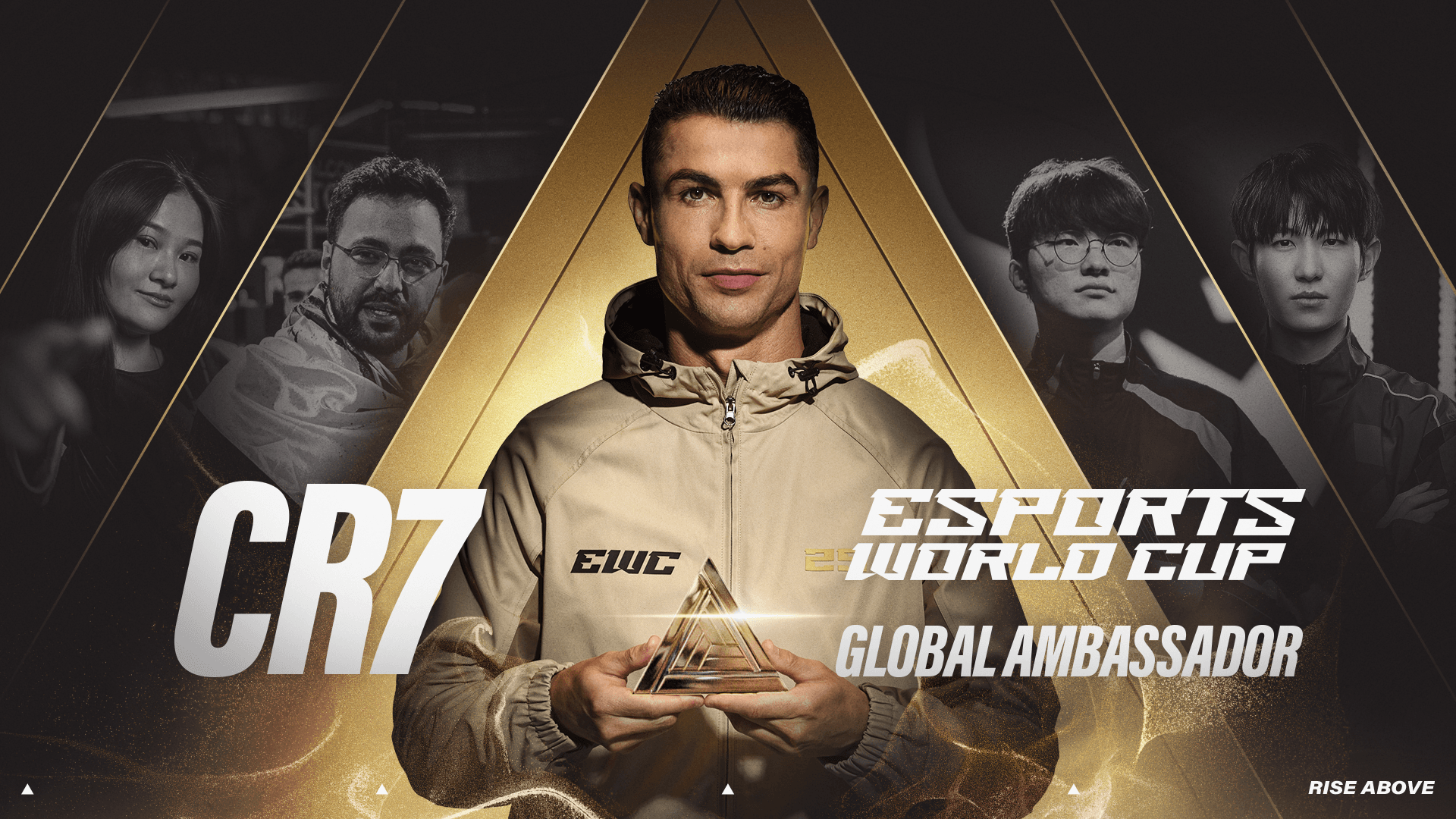
Cristiano Ronaldo EWC
There is also an MVP award. In 2024, T1’s mid laner Faker received the tournament MVP title and a $50,000 bonus.
Organizations that compete across multiple titles earn points based on their team’s finishes. For League of Legends, the top eight teams contribute points toward their club’s overall standing. In 2024, T1 amassed 1,000 club points, helping their organization compete for the overall title of best multi-game esports club. These points are tracked separately and accumulate from multiple games across the EWC festival.
This incentivizes having teams that can compete in multiple games during the event.
History of EWC Events
EWC 2025
EWC 2025 runs between July 13rd and August 16th, taking place in Riyadh, Saudi Arabia.
The 2025 edition introduces a more layered system to accommodate additional teams and broaden regional representation. Twelve teams were selected through regional performance rather than invitation alone. These included champions and high-placing teams from LCK, LPL, LEC, LCS, and regions such as PCS (Pacific Championship), VCS (Vietnam), and Latin America. The qualification structure was designed to ensure that strong teams from all regions could compete on equal terms with the traditional powerhouses in Korea, China and North America.
EWC 2025 poster
Four teams were pre-seeded directly into the playoffs. This group included the defending EWC champion and the top three performers from spring and MSI. The remaining eight teams entered through a group stage, which followed a GSL-style double-elimination format. Each group had four teams. Teams played best-of-one matches, with the winners advancing through the upper path, and losing teams getting a second chance through a lower match. The winners of each group’s final two matches advanced to the playoffs, where they would face the pre-seeded teams.
EWC 2024
The tournament was held in Riyadh, Saudi Arabia, and is part of a multi-game esports festival. Matches are streamed live through official channels, with English-language broadcasts on Twitch and other platforms offering regional commentary.
The production standards and casting teams are on par with Riot’s own events. Players and fans from the MENA region also benefit from this location, gaining local access to international League of Legends competitions.
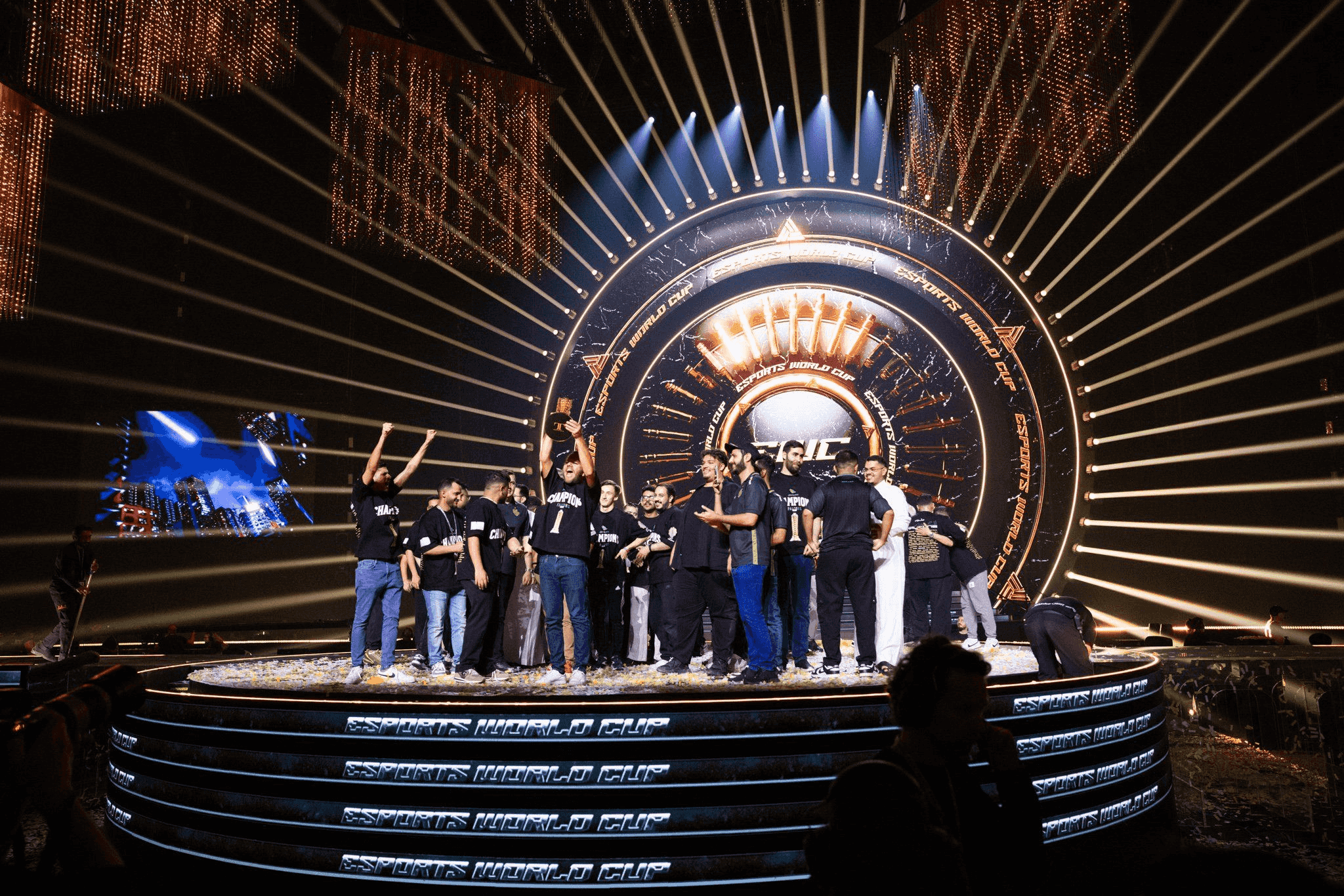
EWC 2024 winners
Riot’s stated goal was to give organizations more paths to financial stability, and the EWC contributes to that aim by offering substantial prize money and visibility during a part of the year that previously lacked such events.
Final Thoughts
The EWC stands to become a staple of the League of Legends competitive calendar by giving teams a chance to show off before Worlds. It's also great in paper for the esports ecosystem in general, incentivizing new teams to get into the calendar, or older teams to get into more games to try and place higher in the prize pool.
It may very well be the perfect thing we need to shake things up between MSI and Worlds.
SELVA MOONBELL
Content Writer
Self-professed League historian and lore archivist.